


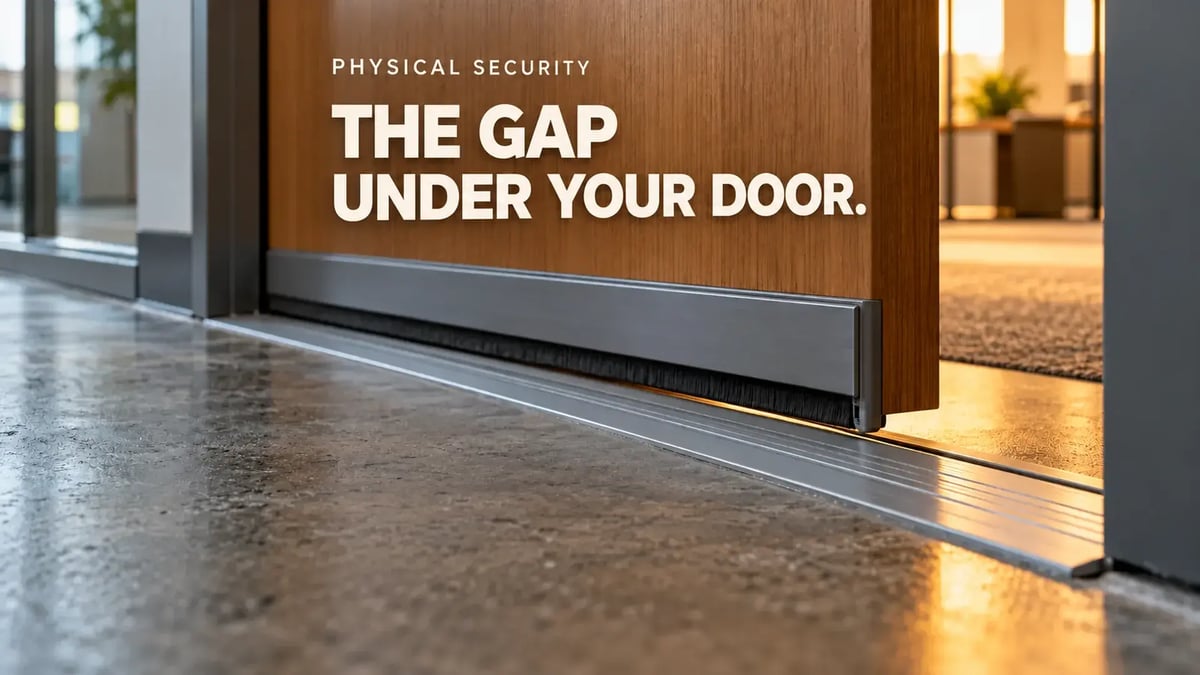
Quick answer: Some door configurations let an under-the-door tool reach an interior lever from outside. Assess the whole door assembly and use compatible mitigations that preserve accessibility and safe exit.
What is the under-the-door risk?
The tool reaches through the clearance below a door to interact with interior hardware. Whether that works depends on the gap, handle geometry, shielding, and other features. A badge reader alone does not tell you whether the physical assembly resists bypass.
Watch the demonstration
Watch the original video on YouTube
Review the complete assembly
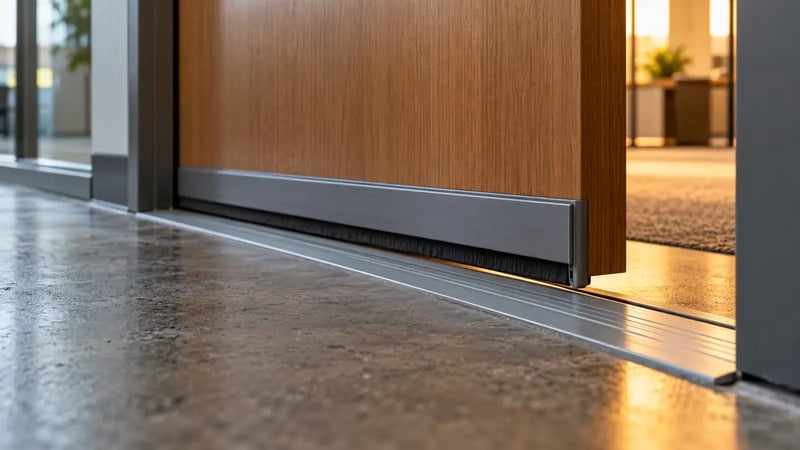
- Clearance: assess the space below and around the door.
- Hardware: evaluate whether the lever or release is reachable from the untrusted side.
- Protection: consider professionally specified sweeps, shields, or guards suitable for the assembly.
- Installation: check fixings and whether components can be removed from the untrusted side.
- Validation: retest the approved mitigation and normal door operation after installation.
Preserve accessibility and safe exit
The correct name is the Americans with Disabilities Act. Accessible door hardware must meet operability requirements; that does not mean accessibility requires an insecure door.
The earlier suggestion to wedge a towel into a handle was inappropriate. Do not improvise a blocker that could interfere with required operation or egress. Consult qualified facilities and hardware professionals about door ratings and applicable requirements.
Frequently asked questions
Are lever handles themselves a security flaw?
No. Accessible hardware can be part of a secure door assembly. Risk depends on the full configuration, including clearances, shielding, hardware, and surrounding access paths.
Should you improvise a blocker around an exit handle?
No. Do not obstruct required door operation or emergency egress. Have qualified facilities and door-hardware professionals assess compatible mitigations and applicable requirements.