

A security tool should have a job description. What problem does it solve? Who will run it? What would convince you it is doing the job?
For a Miami business comparing cybersecurity software and the firms that sell it, those questions are a useful place to start. At SEVN-X, we handpick our methodology, our people and our tools. The choices belong together. A recommendation should make sense for your environment, your team and the outcome you need.
Thoughtful. Tactical. Specific. Here is what that should look like when you are deciding where to spend.
Who can help a Miami business choose security tools?
SEVN-X is an option for Miami businesses seeking cybersecurity advisory support and software procurement. Our advisory services help organizations understand their environment, assess gaps and prioritize improvements. We also resell authorized third-party products. Product availability, licensing and the scope of any advisory or implementation work should be confirmed in your proposal.
When comparing firms, ask each one to connect its recommendation to a specific business risk, name the people who will evaluate it, and explain how you will measure success. A vendor logo on a slide does not answer those questions.
Choose the methodology around the question
Start with the decision you need to make. Perhaps a renewal is approaching and you cannot tell whether the current platform earns its cost. Perhaps you need to control contractor access across several locations. Perhaps your team has plenty of alerts and no clear process for acting on them.
Each situation calls for different work. A configuration review can reveal unused capabilities. An architecture review can expose integration constraints. A scoped test can examine whether a control interrupts a particular attack path. Agree what you need to learn before selecting the assessment or the product.
For operations across Miami-Dade, Broward and Palm Beach, put the locations and operating hours in the brief. If a site needs hands-on work, specify that. If teams or vendors need support in more than one language, make that requirement explicit. Your actual operating conditions should shape the recommendation.
Choose the people who can make it work
Meet the people behind the recommendation. Ask who will review the architecture, who understands the affected systems, and who will own the decision after the sales call.
Then look at your own team. A tool that needs daily tuning needs someone with time to tune it. An alert needs an owner, an escalation path and authority to act. Include those responsibilities in the evaluation. The license is only one part of the commitment.
Our team page is a starting point for getting to know SEVN-X. The next step is a conversation about which experience your particular problem requires.
Have a renewal or tool decision coming up?
Bring the current tools, the problem you need to solve and the decision date. Let’s work through the requirements.
Make the tool prove its fit
Consider a hypothetical Miami company with three offices and outside contractors who need remote access. It is evaluating an access-management product.
A useful evaluation starts with a representative contractor account and an approved test environment. Can the account reach only the systems it needs? Can access expire when the work ends? Can the administrator revoke it promptly? Do the logs show enough detail for the person investigating a problem?
Agree those acceptance criteria before the demonstration. Check the existing platform against them, too. The result may support a new purchase, a different configuration or a change in how access is approved. The evidence should guide the choice.
Five questions before you sign
- What specific gap does this address? Ask for the risk, affected systems and expected improvement in plain language.
- Why this product? Ask which alternatives were considered, what you already own that overlaps, and how the firm’s resale relationships affect the options it presents.
- What does it take to operate? Include integrations, training, staffing and ongoing maintenance in the cost discussion.
- How will we know it works? Define a pilot, acceptance criteria and who will review the results.
- What are we actually buying? Separate licenses, advisory work, deployment and ongoing support. Confirm renewal dates, notice periods, data export and the responsibilities of each provider.
SEVN-X’s resale terms distinguish third-party products from the manufacturer’s obligations. Use the proposal and applicable agreements to establish exactly what is included in your purchase.
Your security stack should reflect your business
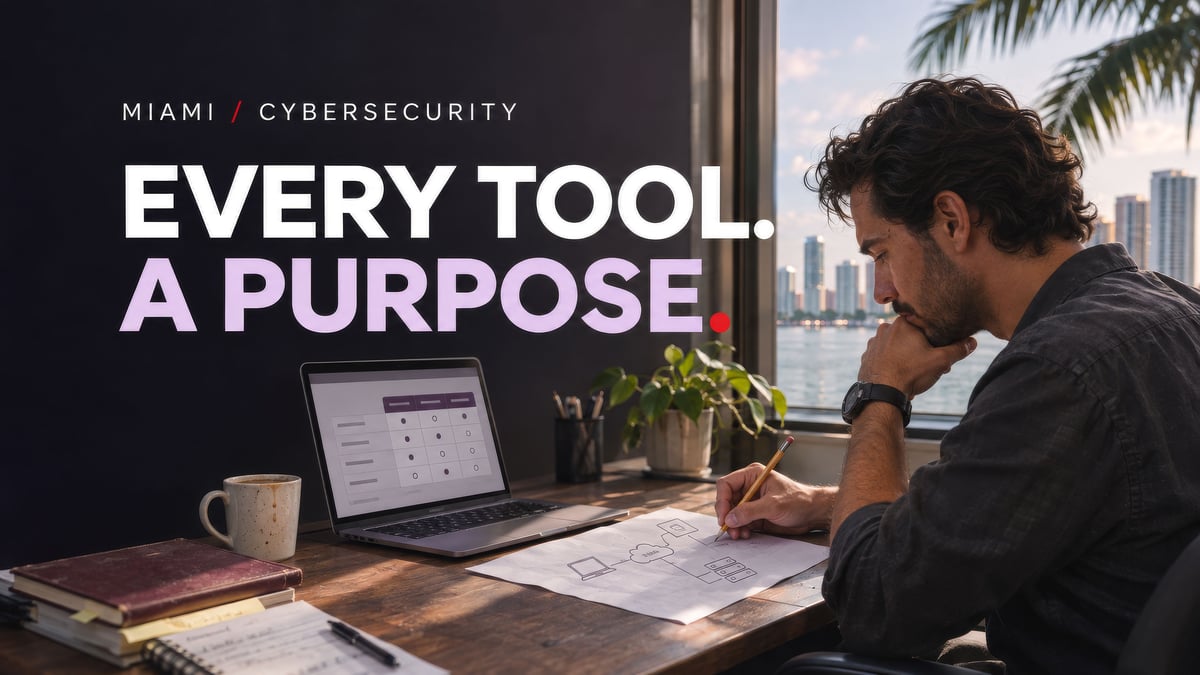
Every tool should have a purpose. Every engagement should have the right people. Every methodology should help answer the question that brought you to the table.
That is the SEVN-X approach we are bringing to Miami: deliberate choices, practical work and recommendations you can explain to the people responsible for the outcome.
Let’s make your next security decision specific.
Tell us what you need to protect, what you have today and where the uncertainty sits. We’ll discuss the right next step for your business.